
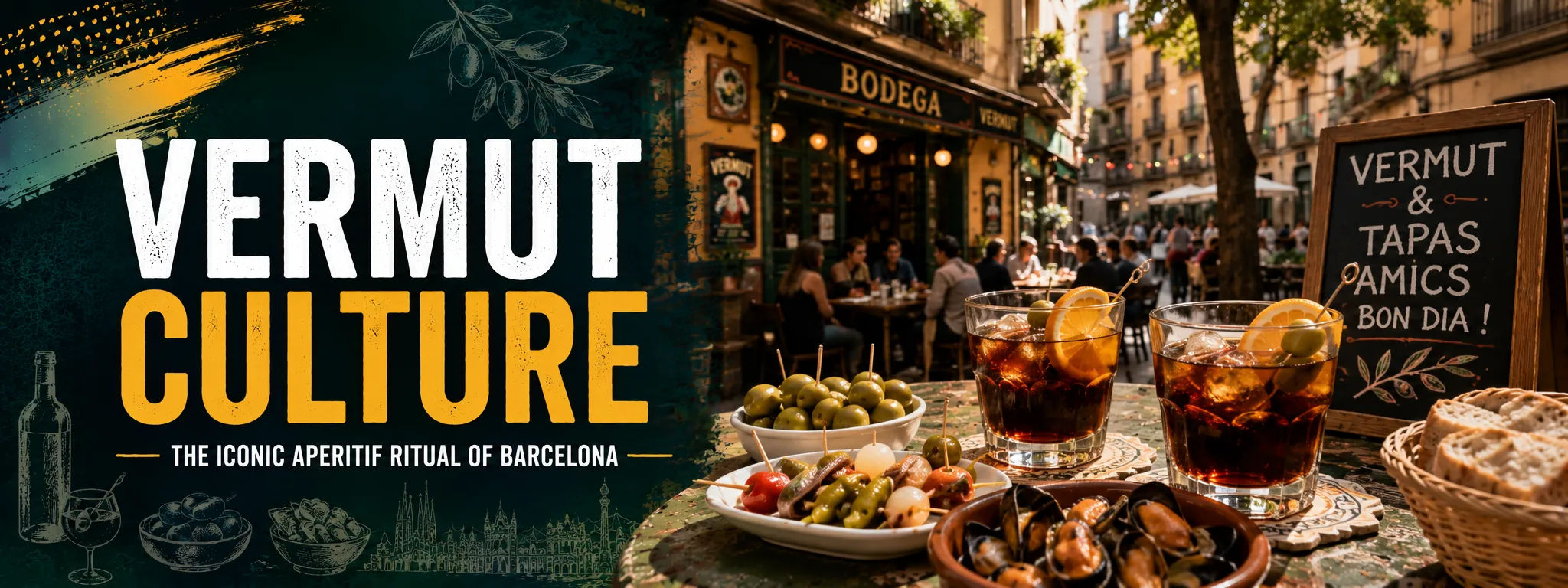
What “fer el vermut” actually means
In Barcelona, fer el vermut is bigger than the drink. It means taking time for a pre-lunch aperitif — traditionally vermouth, often with something salty to eat — and treating the pause itself as the point. The classic moment is late morning into early afternoon, especially at weekends, but modern vermuterias may serve it far beyond that window.
Vermouth is aromatised, fortified wine. Catalonia has a particularly strong vermouth tradition, with Reus in southern Catalonia closely associated with its commercial history and still promoting a dedicated Vermouth Route and exhibition space. Barcelona took that aperitif habit and made it part of neighbourhood bar culture.
How to order without overthinking it
Ask for un vermut and the bar may offer its house pour or a choice of red, white or different producers. Red vermouth is the familiar starting point, usually served chilled; soda, ice, citrus or an olive depend on the house and your preference. There is no need to perform a ritual perfectly.
If you do not drink alcohol, the social ritual still works. Order a non-alcoholic aperitif, sparkling water, soft drink or whatever the bar offers and share the snacks. “Vermut hour” is about slowing the day down before lunch, not proving anything with a particular bottle.
What comes with it
Olives, crisps, anchovies, pickles, cockles and other preserved seafood are classic partners because salt, acidity and bitterness work well together. Some bars add simple tapas, conservas, cheese or more substantial plates. You can keep it to one drink and a snack or let it turn into lunch.
Where the ritual fits best
Traditional bodegas and specialist vermuterias are the obvious setting, but the habit is citywide. Gràcia, Sant Antoni, Poble-sec, Eixample and the old city all have places where a midday vermut makes sense. Tourism of Barcelona continues to describe both long-established and newer vermuterias as part of the city's food culture, which is a good sign that this is not merely nostalgia packaged for visitors.
Do not chase one supposedly “authentic” address across town. Pick a place that fits your route, ideally somewhere with local foot traffic and a short menu you actually want to eat. Venue ownership and opening hours change; if a specific bar matters to you, verify it on the day.
Best timing for a visitor
A weekend around noon gives the clearest version of the ritual, when groups and families naturally gather before lunch. On weekdays, a late-morning or early-afternoon stop can still work, especially in areas with office and neighbourhood trade. Avoid forcing it at 10am simply because a travel article told you vermut is “traditional”.
Because Barcelona lunches often run later than visitors from northern Europe expect, a small aperitif can be a practical bridge between breakfast and lunch. Keep the snack modest if you have a restaurant booking.
What it tastes like
Expect sweetness balanced by bitterness, herbs, spices and citrus-like aromatics. Styles vary widely: some are lighter and floral, others darker, more bitter or spice-heavy. If you normally dislike sweet drinks, ask for a drier style or a splash of soda rather than writing vermouth off after one glass.
Price, tipping and etiquette
Prices vary by venue and brand, so a single “normal Barcelona vermut price” goes stale quickly. Check the menu before ordering if budget matters. Tipping is optional rather than compulsory; rounding or leaving a small amount for good table service is fine. Our money and tipping guide has the broader payment context.
Order at the bar if that is clearly how the place works; otherwise wait for table service. Do not worry about speaking perfect Catalan or Spanish. A simple greeting, un vermut, si us plau in Catalan or un vermut, por favor in Spanish, is plenty.
A low-effort vermut plan
Build it into a neighbourhood day rather than making it a destination hunt. Explore Gràcia or Sant Antoni in the morning, stop for one vermut and a salty snack around midday, then continue to lunch or a market. If you are already visiting the Picasso Museum or El Born, the same logic works there.