
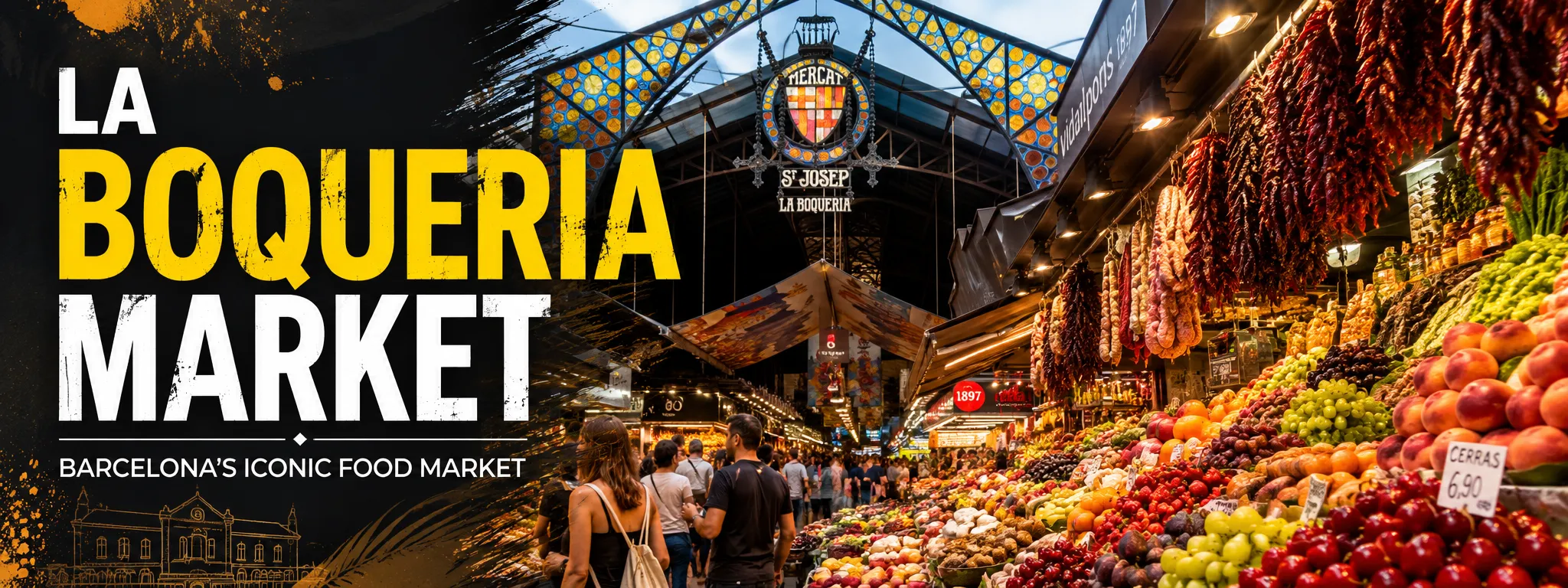
What La Boqueria is — and what it is not
La Boqueria is Barcelona's famous covered food market on La Rambla. It is both a working market and one of the city's busiest visitor sights. That combination is the key to enjoying it: go to look, buy and eat, but remember that traders are working and local shoppers need space.
Current opening hours
The market's official site currently lists regular opening hours of Monday to Saturday, 8:00am–8:30pm. Individual stalls and the information point can keep different hours, and holidays may alter the schedule. Check the official market site for special openings or closures before making a trip around one specific stall.
When to go
Early morning gives you more room and a clearer sense of the produce market. Late morning into lunchtime is livelier but much busier. If your goal is photos and browsing, arrive early; if your goal is a particular cooked-food bar, check that business's own hours because not every counter follows the full building schedule.
Do one lap before buying
The entrance from La Rambla can be the most visitor-focused part of the market. Walk deeper before deciding. Compare fruit, seafood, meat, cheese, olives, nuts, preserves and prepared food. A first lap also helps you see which counters have a queue of regular customers rather than just a colourful display.
What to eat
There is no single mandatory Boqueria dish. The best approach is to buy something that looks genuinely good from a specialist: seasonal fruit, jamón or cheese, seafood, olives, a market breakfast or a cooked plate at a bar. Share small things if you want variety. Do not feel obliged to buy a pre-cut fruit cup or souvenir snack just because it is nearest the entrance.
Eating at market bars
Counter seats can turn over quickly. Read the menu, be ready to order, and do not occupy scarce seats long after finishing when a queue is waiting. Popular counters can be full at obvious meal times; a second-choice bar with fresh turnover is often better than spending a large part of your sightseeing day in one queue.
Keeping the visit good value
Prices vary by product and stall. Look at displayed prices before ordering, especially for items sold by weight. A market is not automatically cheaper than a supermarket or neighbourhood café. Pay for quality or convenience when it matters to you rather than assuming every purchase is a bargain because it is in a historic market.
Market etiquette
Ask before close-up photos of traders, do not block narrow aisles for group shots, and move away from the counter after paying. Keep food and bags under control in crowded passages. If you are visiting with a tour, follow the guide's instructions about where groups can stop without obstructing commerce.
Access, families and mobility
La Boqueria is centrally located beside La Rambla and close to Liceu metro. The market floor is generally level, but crowds can make manoeuvring a wheelchair or pushchair much harder than the physical surface suggests. An earlier visit is usually easier for families and travellers who need more space. Use the official information point for on-site help.
What to combine with La Boqueria
Pair it with the Gothic Quarter, Plaça Reial or a La Rambla walk rather than crossing the city solely for a long market meal. For a deeper food day, compare it with a neighbourhood market later in the trip: Boqueria is iconic, while local markets can show a different everyday rhythm.
Common mistakes
- Going at peak lunch time and then complaining it is crowded.
- Buying at the first stall without looking around.
- Treating traders and displays as a photo set.
- Assuming every market price is cheap.
- Building the entire visit around one viral stall.
A good 45–75 minute visit
Enter from La Rambla, walk a complete loop, choose one or two things to taste, then leave before market fatigue sets in. If you want a seated meal, allow more time but keep the rest of your day geographically close. Boqueria is best as part of Barcelona, not as a queue-management challenge.
Why the market matters
Tourism of Barcelona traces La Boqueria's formal market opening to 1840, with trading on the Rambla site going back much earlier; its metal roof was completed in 1914. That history helps explain why it is more than a food hall. The mix of specialist traders, prepared-food counters and constant pedestrian flow is part of a long-running city market, even though visitor pressure now shapes the experience heavily.
Look beyond prepared snacks
The market's official stall directory still spans fish and seafood, meat, poultry, fruit and vegetables, olives and preserved foods, groceries, nuts, legumes and other specialist categories. If you only browse juice cups and ready-to-eat snacks at the front, you miss much of what makes the market interesting. Walk the produce and specialist aisles even if you are not cooking during your trip.
Buying food for later
If your accommodation has a fridge or kitchen, the market can be useful for a picnic or simple meal. Ask how long an item can safely travel unrefrigerated and buy perishables near the end of the visit. Travellers flying onward should also remember that destination-country food import rules can restrict meat, dairy, fruit or other fresh products; a souvenir tin or packaged product is often easier than trying to take fresh market food across a border.
Photography without becoming the obstruction
Wide market scenes are easy; close portraits of traders deserve more care. Ask before leaning into a working counter, avoid holding a phone over food while someone is trying to buy, and do not stop abruptly in narrow aisles. A few quick photos early in the day usually produce better results than fighting the lunchtime crowd for the same shot.