
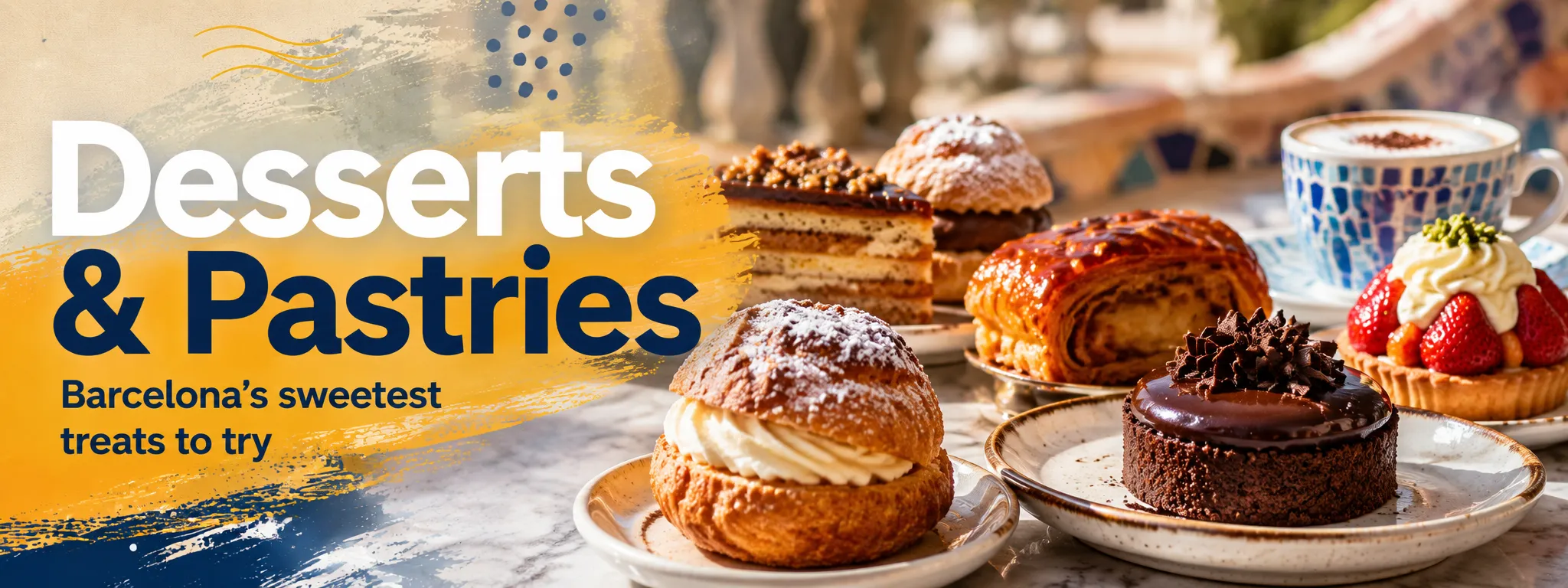
Start with Catalan sweets, not a generic dessert list
Barcelona has excellent pastry shops, but the most interesting sweet eating is tied to Catalan recipes and the calendar. Some things are everyday café food; others appear mainly around religious or seasonal celebrations. That means a good “dessert crawl” changes depending on when you visit.
Crema catalana
Crema catalana is a custard flavoured traditionally with citrus peel and cinnamon and finished with a caramelised sugar crust. Barcelona Tourism’s recipe uses milk, egg yolk, sugar, cornflour, cinnamon and lemon peel. It is a proper Catalan classic, not simply Barcelona’s name for crème brûlée, even though the comparison helps explain the texture.
Order it at a restaurant after a Catalan meal rather than assuming every pastry shop will sell it as a takeaway sweet. The best versions balance cold custard, aromatic citrus and a freshly crisped top.
Mel i mató
Mató is a mild fresh cheese traditionally served with honey. It is less theatrical than a brûléed custard, but it is one of the simplest ways to taste the Catalan preference for good ingredients doing most of the work. Barcelona Tourism includes mel i mató among characteristic Catalan desserts.
Panellets and All Saints
Panellets are small almond-based sweets closely associated with the autumn Castanyada and All Saints period. Pine-nut versions are especially recognisable, but shops produce many variations. If you visit outside the season, do not judge a bakery for not displaying them year-round; their calendar connection is part of the tradition.
Xuixo and filled pastries
The xuixo originated in Girona but is easy to encounter in Barcelona pastry culture: a fried, sugar-coated pastry commonly filled with cream. It is richer and heavier than a croissant, so it makes more sense as a deliberate treat than something to add automatically after a full breakfast.
Coca: one name, many styles
Coca covers a broad family of flat breads and cakes, both sweet and savoury. Around Sant Joan in June, sweet coques become especially visible, often decorated with candied fruit, nuts or cream. Bakeries have their own versions, so compare what looks fresh rather than chasing one supposedly definitive recipe.
What about churros and chocolate?
Churros with thick hot chocolate are easy to find and absolutely worth eating if you enjoy them, but they are a wider Spanish tradition rather than a uniquely Catalan dessert. In Barcelona, old-school granges and chocolate shops are a good setting for them, especially in cooler weather.
Where to shop
Traditional pastisseries and bakeries are the best place to see what is seasonal. Markets can also be useful, but a specialist pastry shop usually gives you a clearer sense of the local calendar. Buy fewer things while they are fresh instead of collecting a box that will sit in a hotel room all day.
Dietary and allergy questions
Eggs, milk, wheat, almonds and other nuts are common across Catalan pastries and desserts. Vegan or gluten-free versions exist, but never infer suitability from appearance. Ask about ingredients and cross-contact, especially for panellets, custards and filled pastries.
A simple tasting strategy
Try crema catalana after a sit-down meal, choose one fresh pastry with coffee on another morning, and look for a seasonal sweet if your dates line up with Sant Joan, All Saints, Christmas or Easter. That gives you more context — and is much more enjoyable than trying ten sugary things in one afternoon.
Official food context
See Barcelona Tourism’s crema catalana guide and its broader gastronomy material for Catalan dishes and desserts.